Symposium on “Neolithic Culture in Meghalaya”
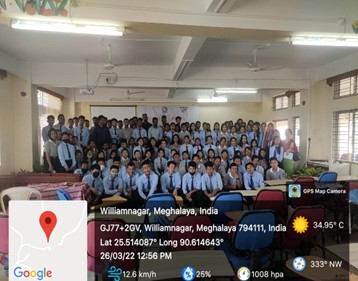
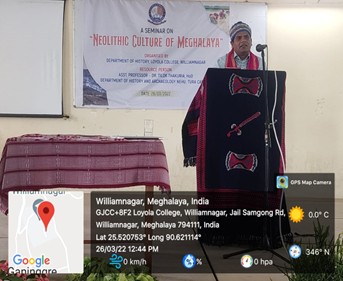
The Department of History, Loyola College, organized a symposium on the topic “Neolithic Culture in Meghalaya” on 26th March 2022. The symposium was conducted to enhance the knowledge and understanding of students regarding the prehistoric culture and archaeological heritage of Meghalaya and Northeast India. The resource person for the symposium was Dr. Tilok Thakuria.
During the symposium, Dr. Thakuria explained that the Neolithic sites of Northeast India were first reported in 1867 by Lieutenant Steel from Upper Assam. The findings were later published in The Athenaeum by John Lubbock. He also highlighted that many colonial officers collected polished and ground stone tools from different parts of Northeast India.
The speaker discussed the archaeological surveys conducted in the Garo Hills by M. C. Goswami and T. C. Sharma since the 1960s. Their studies identified the presence of Paleolithic, Microlithic, and Hoabinhian cultural remains in the region. Various excavations in Meghalaya led to the discovery of important prehistoric tools such as choppers, hand axes, cleavers, discs, picks, pebble tools, and pointed pick-like tools.
Dr. Thakuria also shared his experience from the excavation carried out at Misimagre in 2017, in the Garo Hills of Meghalaya which provided significant evidence related to prehistoric human activities in the region. The seminar was highly informative and helped students gain deeper insight into the archaeological and cultural history of Meghalaya.
The program concluded with an interactive session where students and faculty members discussed the importance of preserving the rich archaeological heritage of the state.